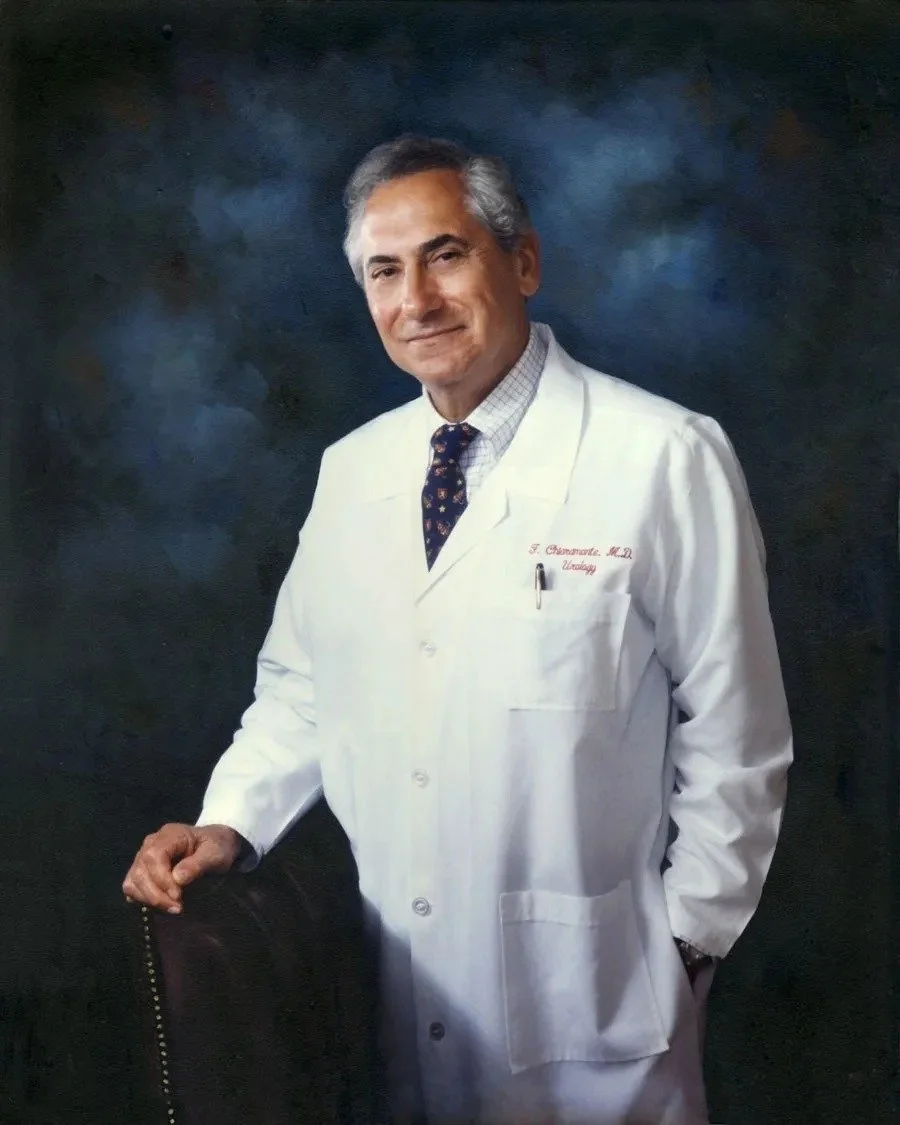

Dr. Chiaramonte Receives 2025 Lifetime Achievement Award
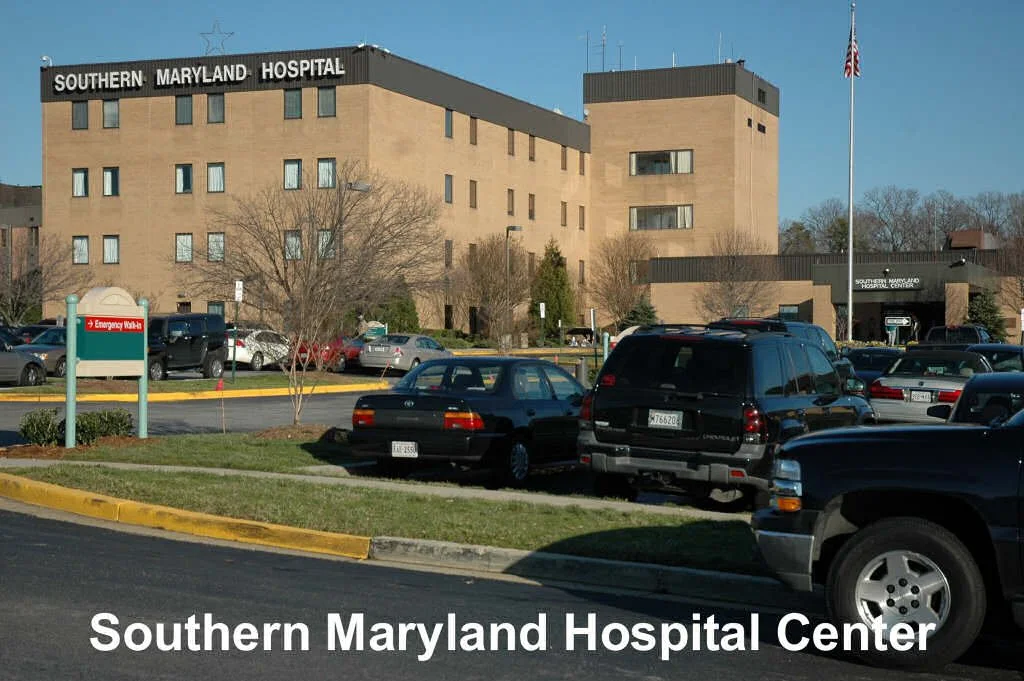
The original hospital campus at Southern Maryland Hospital.
A Hospital Built Against the Odds, Honoring The Man Who Refused To Look Away
By Raoul Dennis
On the southeastern edge of Prince George’s County, just a dozen miles from the nation’s capital, a hospital stands today that many once said would never exist. MedStar Southern Maryland Hospital—known for decades as Southern Maryland Hospital Center—serves thousands of patients each year with emergency care, critical services, and advanced medicine.
But its origin story is not one of inevitability or institutional ease. It is a story of stubborn vision, relentless advocacy, and a physician who refused to accept that geography should determine whether people lived or died.

That story—and the life behind it—is the rationale for the Greater Prince George’s Business Roundtable posthumously recognizing hospital founder, Dr. Francis P. Chiaramonte, as its 2025 Lifetime Achievement Award winner on November 12, 2025, celebrating both his professional accomplishments and his enduring civic impact. Chiaramonte died in 2013, a year after the sale to Medstar in 2012.
“[Dr. Chiaramonte] is the genius behind putting that hospital together,” said Jim Estepp, President and CEO of the Greater Prince George’s Business Roundtable. “Getting past all kinds of regulations, getting past people who would do anything to have prevented that hospital from being constructed for competitive reasons.”
Chiaramonte was Estepp’s personal physician when they met in Marlow Heights, where the physician was practicing before developing the hospital.
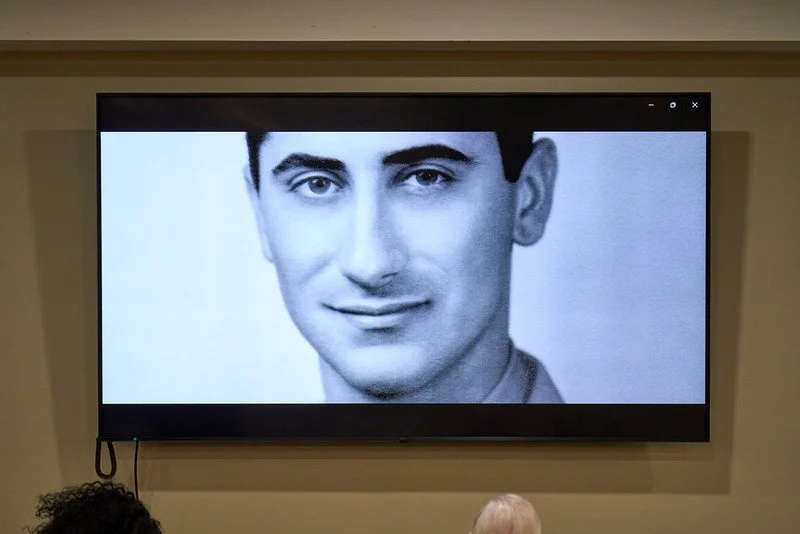
The story is also at the heart of the documentary film Dr. C, a deeply personal portrait of Dr. Francis “Frank” Chiaramonte, the urologist whose determination reshaped healthcare access in southern Prince George’s County. The film, produced by his son, entrepreneur, civic leader and healthcare executive Michael Chiaramonte, traces not just the building of a hospital, but the building of a mission rooted in service, sacrifice, and an immigrant family’s American journey.
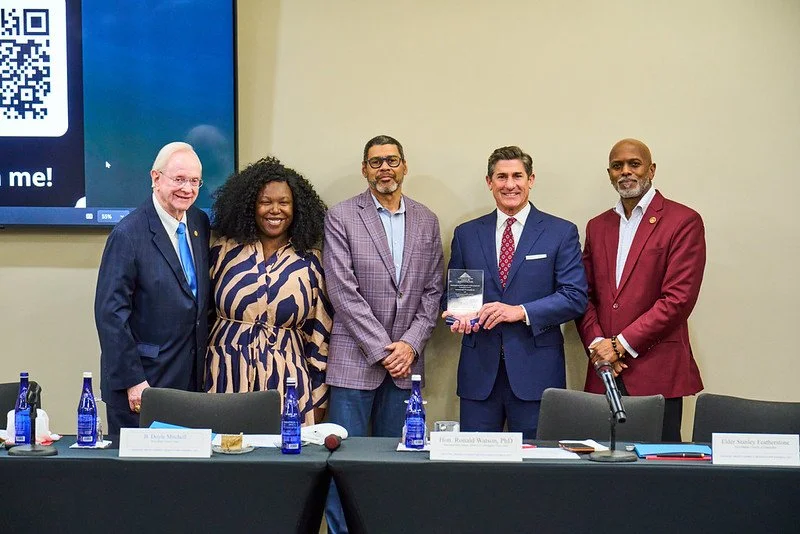
Lifetime Achievement: Michael Chiaramonte (blue suit) accepts the 2025 award on his father’s behalf. He’s joined (L-R) by Greater Prince George’s Business Roundtable Founder, President/CEO Jim Estepp, Prince George’s County Council Chair Krystal Oriadha, Greater Prince George’s Business Roundtable Chair and President/CEO of Industrial Bank B. Doyle Mitchell and Maryland State Senator Ron Watson. PHOTO: AMIR STOUDAMIRE // PRINCE GEORGE’S SUITE MAGAZINE.
Seeing What Others Overlooked
Dr. Chiaramonte arrived in Maryland in the mid-1960s as the first full-time urologist in Southern Maryland, establishing a practice in Marlow Heights at a time when specialized care in the region was almost nonexistent. What he encountered shocked him.
“As the first urological surgeon in Southern Maryland, arriving in the mid-60s, Francis Chiaramonte, MD, observed directly the dearth of advanced healthcare in Southern Prince George’s County as well as the lower counties,” Michael Chiaramonte later recalled.

The southeastern suburbs of Washington, D.C., were growing rapidly. By the mid-1970s, the population had swelled to nearly half a million people—yet the region remained a medical desert. Between Southeast Washington’s Cafritz Hospital (later Greater Southeast Hospital Center) and the small hospital in La Plata, Maryland, there was a vast gap in care. Trauma services, advanced imaging, and round-the-clock surgical teams simply did not exist for residents south of the Beltway.
“The truth is, there really wasn’t any advanced care,” Michael said. “From the 1950s to 1977, when Southern Maryland Hospital Center opened, there was a huge geographic gap in care.”
For Dr. Chiaramonte, this was not an abstract policy failure—it was something he saw in exam rooms, emergency situations, and grieving families. He famously told civic groups that being so close to Washington, while lacking modern healthcare, was unconscionable.
“I will never forget the passion in his voice when he said, ‘We are 12 miles outside of the nation’s capital, and the care down this way is absolutely third world,’” Michael recalled.
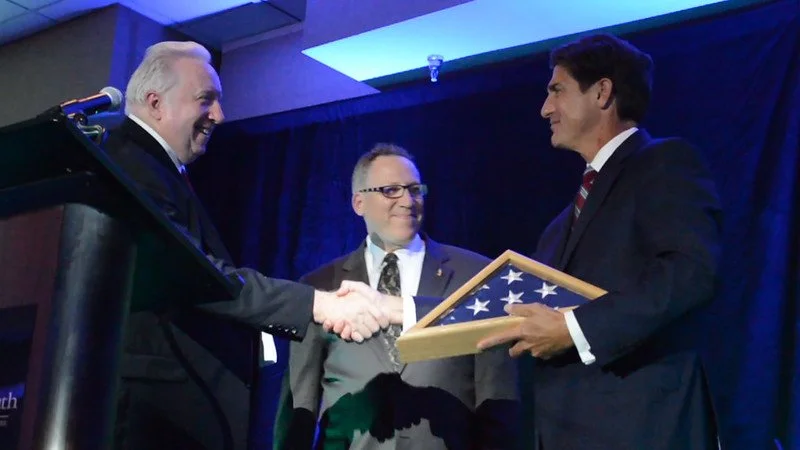
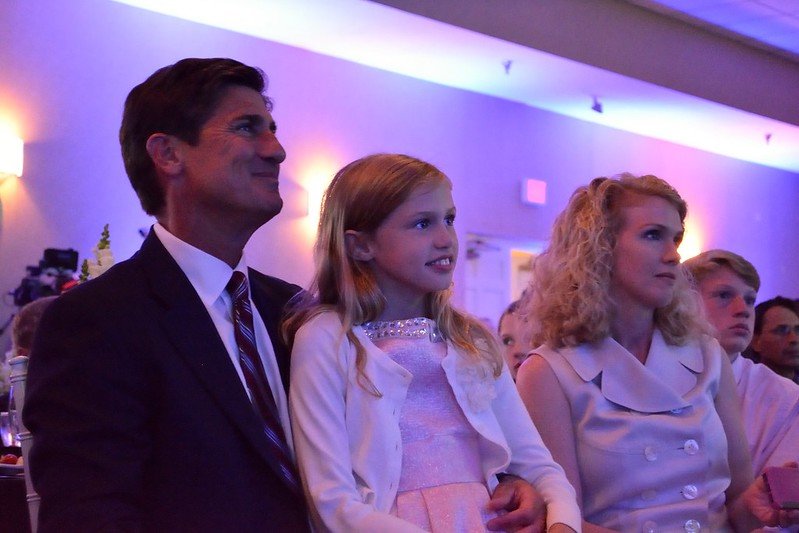
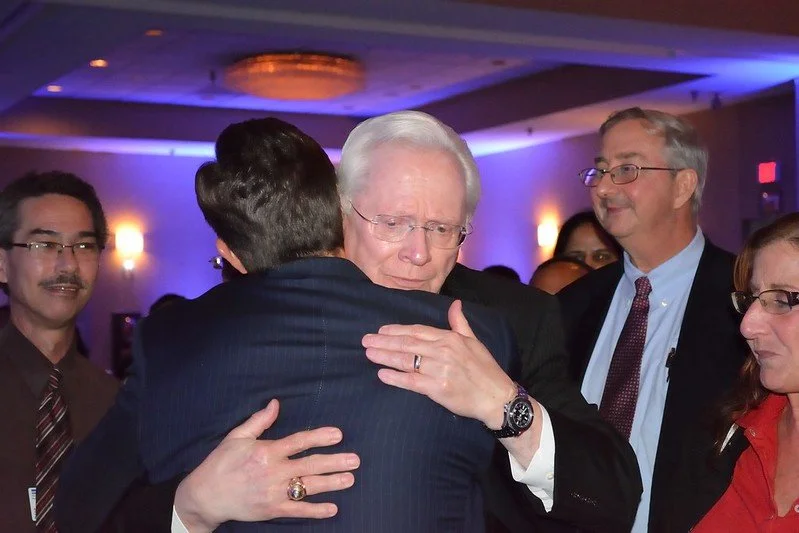

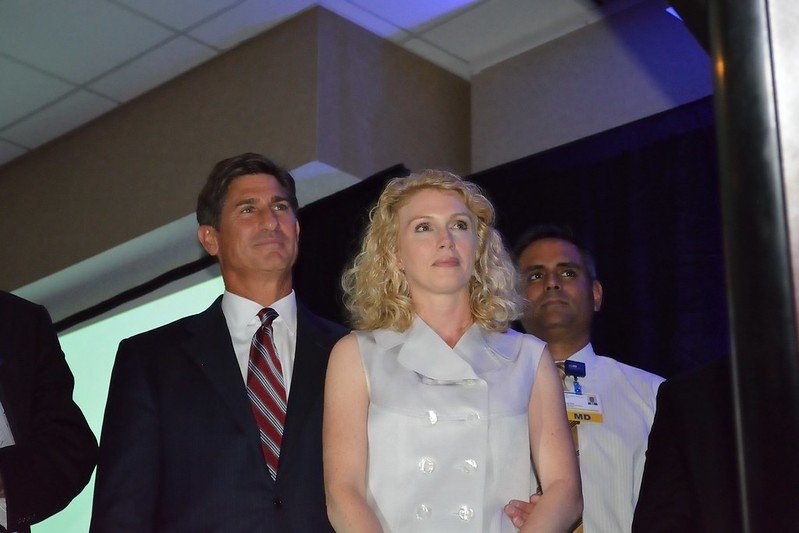
Closing A Chapter: The Chiaramonte Family and guests at Michael Chiaramonte’s retirement event three years after the sale of Southern Maryland Hospital, where he led as president, to Medstar in 2012. His father, Dr. Chiaramonte, passed away in 2013. The event honored the family for 35 years of bringing quality healthcare to southern Maryland. In one photo, Jim Estepp hugs Michael Chiaramonte in thanks. PHOTOS: RAOUL DENNIS // PRINCE GEORGE’S SUITE MAGAZINE
An Immigrant Story at the Core
The documentary Dr. C places this moral urgency within a larger family narrative—one that begins far from Prince George’s County. Dr. Chiaramonte was the son of Sicilian immigrants who arrived through Ellis Island in 1914, fleeing poverty and crop failure. His father had an eighth-grade education and worked with his hands, enduring the scorn and hardship faced by newly arrived Italian families in early-20th-century New York.
They scraped together opportunity one generation at a time. While Dr. Chiaramonte’s sisters sacrificed their own educational dreams, the family pooled its resources to send him to college. He attended Colgate University, earned a master’s degree in public health from Columbia, served as a public health officer in the U.S. Air Force, and then graduated from Georgetown Medical School in the early 1960s.
“He could have gone anywhere,” Michael noted during a Business Roundtable discussion. “But he looked for where the need was greatest”.
That instinct—to go where others would not—defined his career.
Building a Hospital “In Spite of the System”
By the early 1970s, Dr. Chiaramonte had become convinced that incremental fixes were not enough. Southern Prince George’s County needed a full-service hospital, and if no one else would build it, he would.
What followed was a bruising, years-long battle through regulatory hurdles, political resistance, and competitive opposition from existing healthcare systems. The idea that a single physician could lead the creation of a hospital was met with skepticism—and, at times, outright obstruction.
“He worked vigorously for long hours through regulatory processes, political entanglements and regulatory barriers,” Michael said. “Not for himself, but to bring desperately needed services to our community.”

Estepp summarized the feat succinctly: “He built a hospital in spite of the system.”
Dr. Chiaramonte spoke publicly about the stakes. In a 1975 address to the Lions Club, he warned of preventable deaths due to the lack of emergency infrastructure.
“We have no advanced emergency services with imaging and 24-hour trauma and surgical caregivers,” he said. “We are losing our young people on Friday and Saturday nights in car accidents with nowhere to take them.”
The Hospital Opens—and the Work Continues
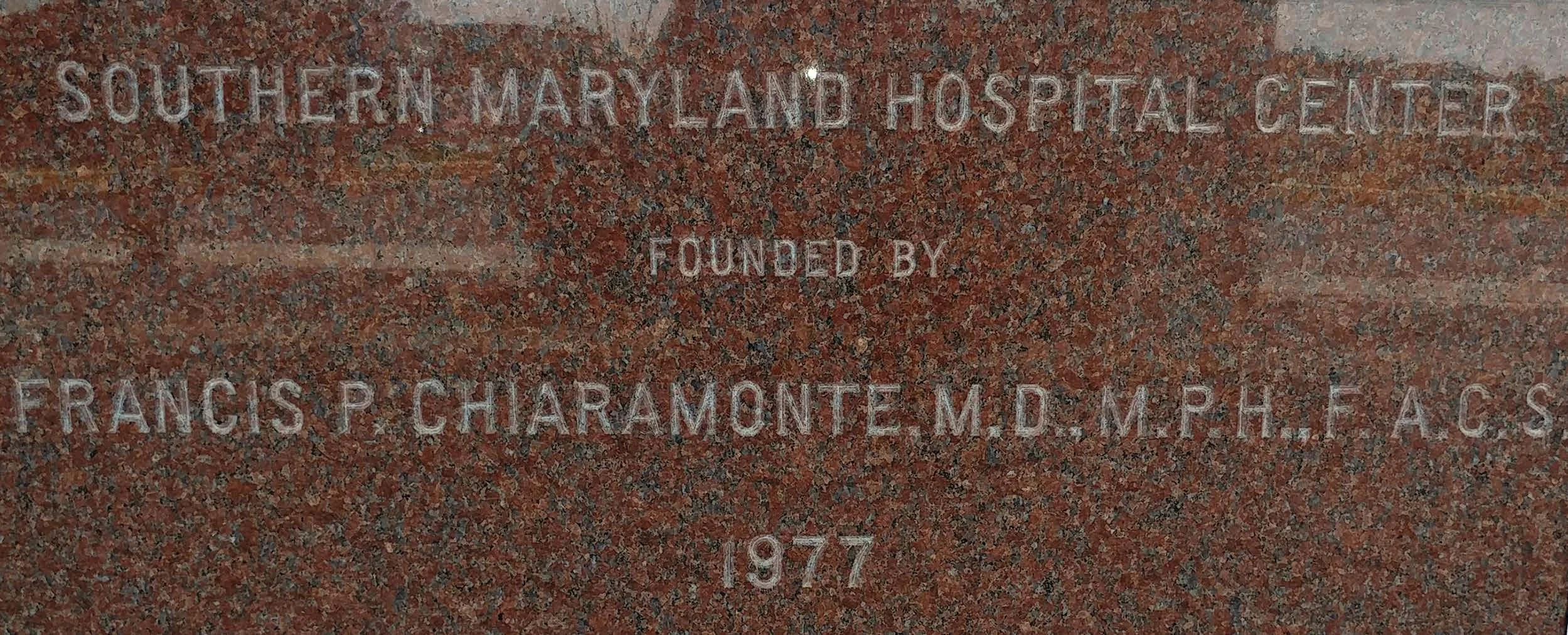
When Southern Maryland Hospital Center finally opened in 1977, it represented more than a new building. It was a turning point in regional equity—a declaration that southern Prince George’s County deserved the same level of care as any affluent suburb.
The hospital grew steadily, expanding services and reputation. Dr. Chiaramonte remained deeply involved in its operation, even as his own health declined. For eight years before his death, he continued working while ill, eventually passing leadership to his son only when he physically could no longer continue.
“He wasn’t the kind of guy who just handed things over,” Michael said. “I wasn’t president until I was in my 50s.”
The family sold the hospital in 2012, shortly before Dr. Chiaramonte’s death, ensuring its long-term stability and integration into a larger healthcare system—what is now MedStar Southern Maryland Hospital.
Dr. C: Memory, Mission, and Meaning
The documentary doesn’t shy away from the struggles behind Chiaramonte’s success. Instead, it frames them as essential to understanding both the man and the moment. Through archival footage, interviews, and personal reflection, the film captures a physician driven not by profit or prestige, but by a fierce sense of moral responsibility.
“It’s an American dream story,” Michael says. “It’s an immigrant story.”
The film’s most powerful moments linger not on accolades, but on urgency—the belief that healthcare is not a luxury, but a right that must be fought for when systems fail.
That message resonated strongly when the Greater Prince George’s Business Roundtable posthumously awarded Dr. Chiaramonte its 2025 Lifetime Achievement Award, recognizing both his professional accomplishments and his enduring civic impact.
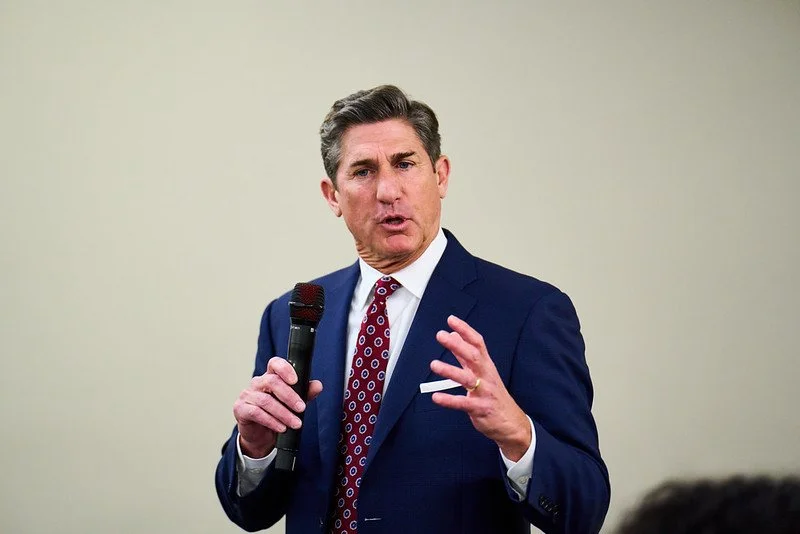
“Our family is honored to receive this award on behalf of Dr. Francis P. Chiaramonte,” Michael said. “Who brought advanced healthcare services to the southern Maryland region.”
A Legacy Still at Work
Today, patients arrive at MedStar Southern Maryland Hospital without knowing the battles once fought on their behalf. They come expecting care—and that expectation is itself part of Chiaramonte’s legacy.
The hospital stands as proof that determined individuals can reshape systems, that one physician’s refusal to accept “good enough” can save generations, and that proximity to power means nothing without the will to serve.
In Dr. C, Michael Chiaramonte ensures that this story is not lost to time. The film preserves the voice, vision, and values of a man who looked at a community’s suffering and chose action over acceptance. The film has won or been recognized in several local and national film festivals.
It is, ultimately, a reminder that hospitals—and other great institutions--do not begin with steel and concrete. They begin with someone willing to say, 'This isn’t good enough—and it must change.'