

Data Center Daze
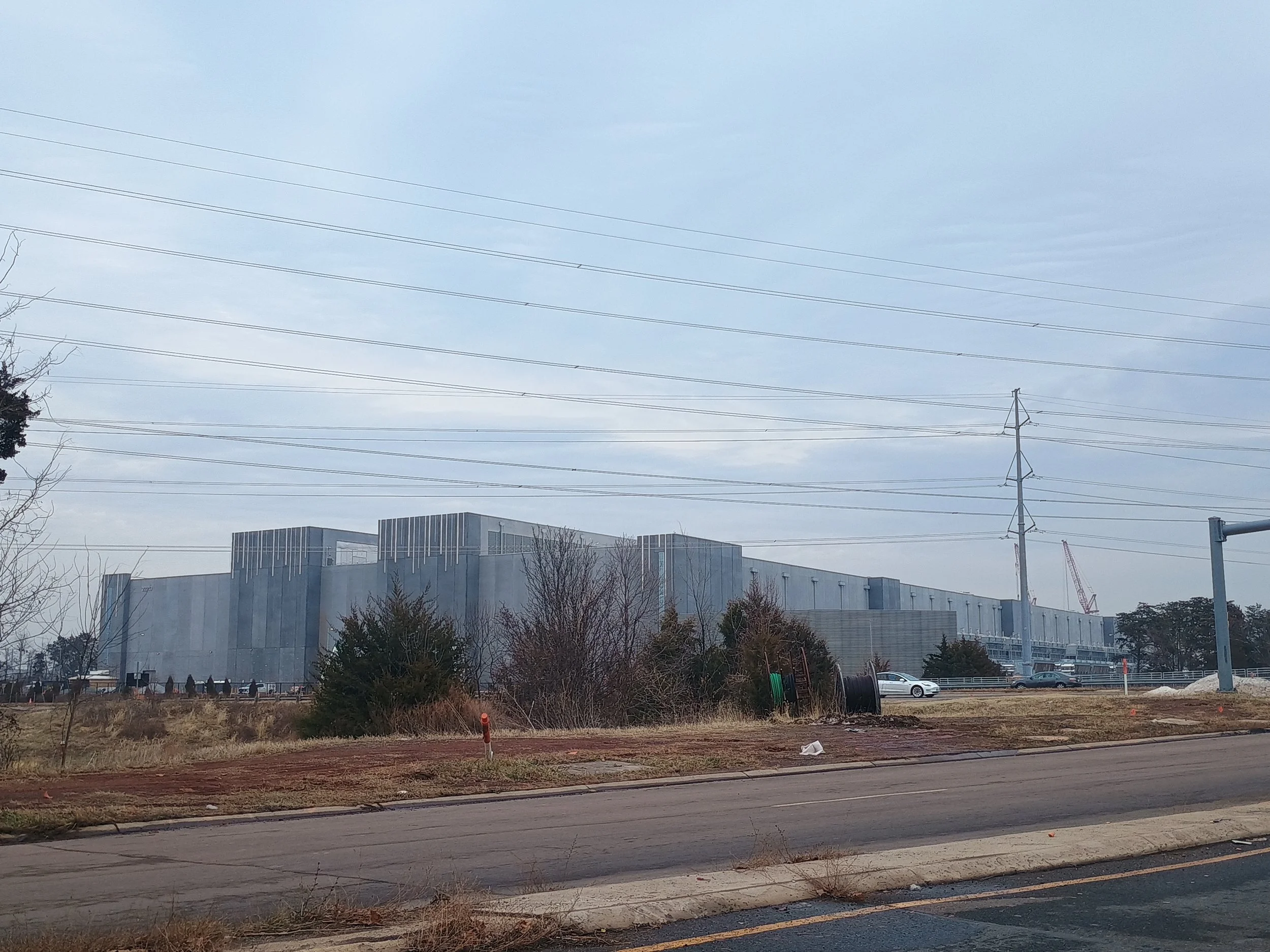
Data Center in northern Virginia. PHOTO: RORY CAHILL
Data Center Plans Spark Controversy In Prince George’s
By Rory Cahill
(MARYLAND MEDIA FOUNDATION - OXON HILL) Imagine a site the size of 71 football fields, with five enormous buildings stuffed with 200,000 computers each. That’s the size of the data center complex that’s proposed for Landover, Maryland.
The complex, which would be built on the site of the former Landover Mall, is part of a broader effort to bring data centers to Prince George’s County, driven in large part by the rapid rise of generative AI.
Supporters of data centers argue that they provide much-needed jobs and revenue for local communities.
But opponents fear the high levels of pollution, noise and energy use that data centers bring. They also oppose placing them near densely populated communities.
“The scale is impossible to understand,” said Kevin Coyle of the Potomac Riverkeepers Network. “These things are city block-sized buildings. They make as much noise as a jet airliner sitting on a runway.”

*The Server Room is the centralized, secure space within a data center that houses the actual physical servers, data storage drives, and networking equipment. It features specialized environmental controls—like high-capacity cooling, fire suppression, and redundant power systems—to keep the hardware running continuously and safely.
*The Technical Support Room is the Network Operations Center (NOC). This is the centralized location where technicians monitor, manage, and maintain the data center's network performance and infrastructure.
*The Cloud Server Room is a dedicated space within a data center that houses the core cloud computing infrastructure, such as servers, storage arrays, and networking equipment. This room acts as the centralized hub for hosting virtualized environments and managing cloud-based services.
*The Server Maintenance Room (often called a staging room or build room) is a dedicated space in a data center used to unpack, test, configure, and repair hardware before it is moved to the main server floor. This prevents cardboard dust, debris, and excessive foot traffic from entering the sterile, temperature-controlled environment of the data halls.
The location debate
Plans for the Landover site have prompted an outcry from residents and community activists. Concerns include of noise, pollution and high consumption of water and electricity. In September, the county paused planning for the site and other data centers, but the pause is temporary, so the site could still be developed in the future.
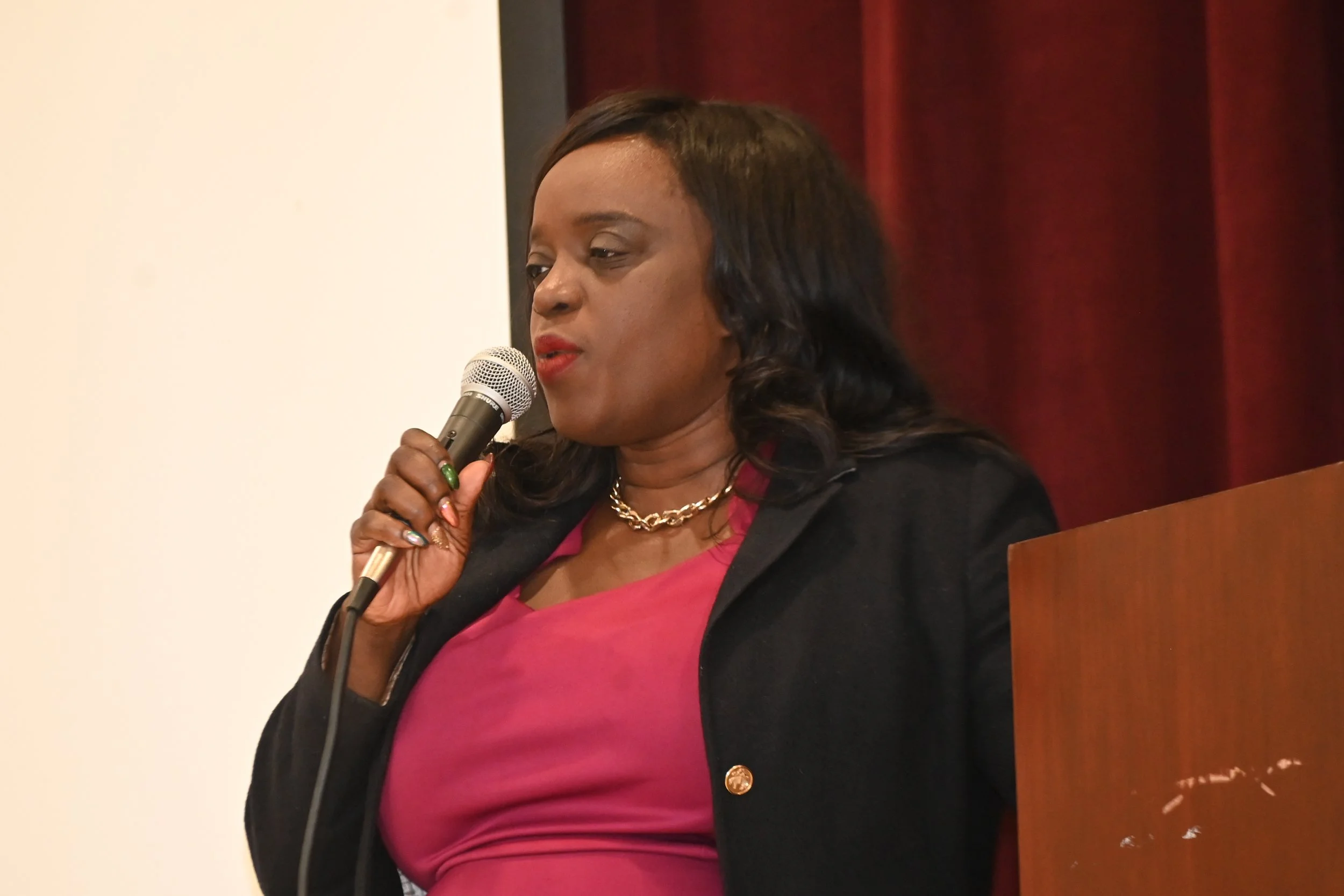
At-Large County Councilmember Wala Blegay.
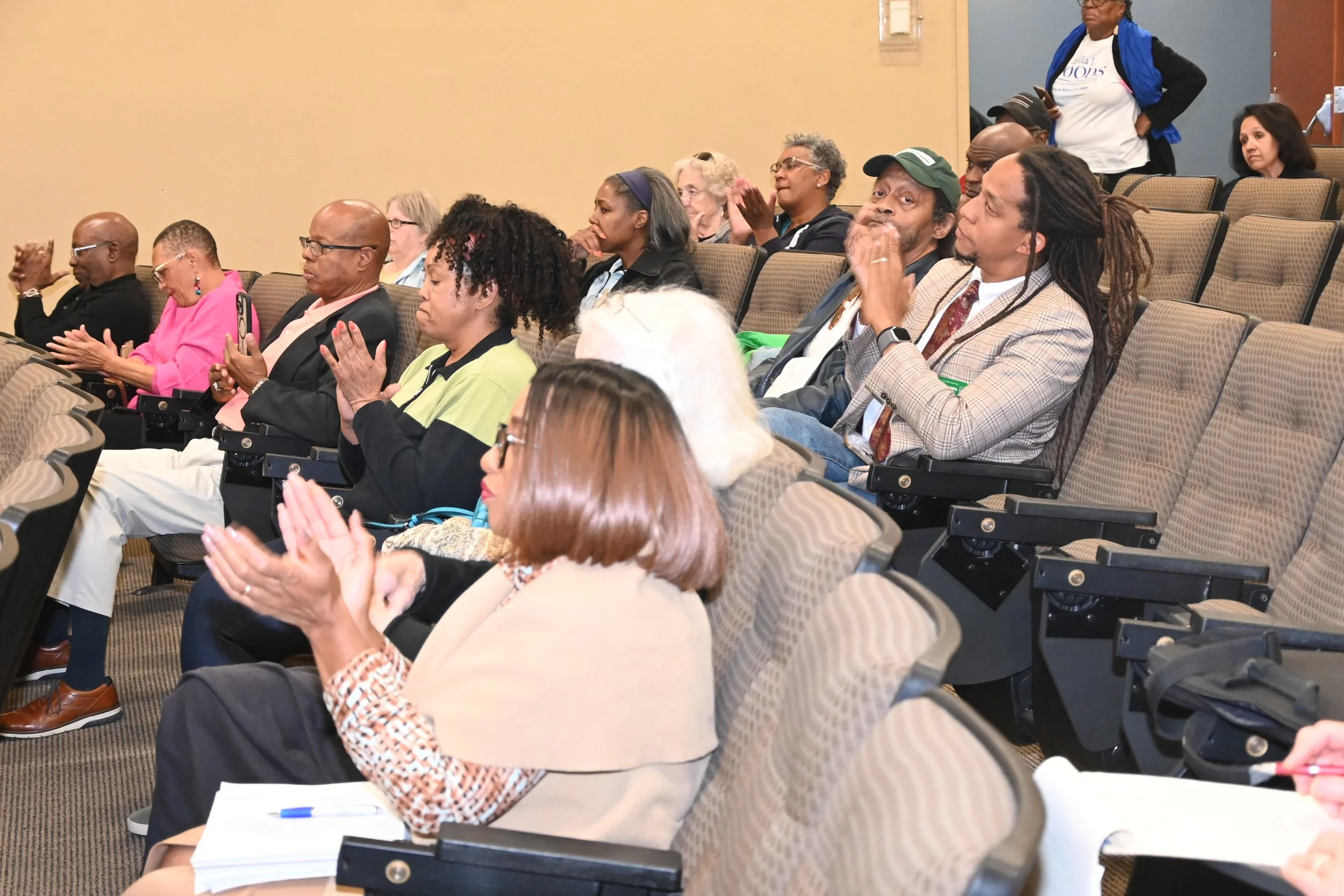
At an October panel discussion in Oxon Hill, hosted by Maryland Del. Jamila Woods (D-District 26), several state and county officials expressed their opposition to the planned data center in Landover. These included Woods along with state Sen. C. Anthony Muse (D-District 26) and Prince George’s County Council member Wala Blegay (District 6).
“We know that we need data centers, but we don’t need data centers in areas that will impact our constituents and our citizens here in the state of Maryland in an adverse manner,” Woods said.
Despite the disagreements over specific sites, people on both sides of the debate agree data centers are necessary. However, some question whether Prince George’s County is the right place for them.
“We are not the same as Frederick County, or Loudoun County, Prince William County. We have much less land, many more people,” said South County Environmental Justice Coalition member Staci Hartwell, who is a member of the data center task force in Prince George’s County. “So you can’t make a comparison of all the great things that’s happening in Loudoun County [Virginia], because we just don’t have the space, and we have so many more people than they do.”
Hartwell also noted a potential racial justice issue. Both Landover and the small town of Eagle Harbor–site of another controversial data center proposal–are majority-Black, and the population of Landover is more than 67% Black according to recent census data.
Nationwide, people of color are disproportionately impacted by environmental issues. According to the University of Michigan, people of color make up 42% of the national population, but represent 57% of the population in counties with unhealthy levels of air pollution.

District 26 Delegate Jamila Woods hosted What Do Data Centers Mean for Us? The forum focused entirely on the public impact of data center development in our neighborhoods, including energy demands, environmental effects, zoning and transparency.
The benefits

Andrew Zirkle
Data centers are all about AI – and when you hear about AI, you might think of weird videos on social media, or maybe a post-apocalyptic scenario like The Matrix. But Andrew Zirkle, government affairs specialist of the Maryland Tech Council, said AI has the potential to save lives, particularly in the early detection of illnesses or injuries.
Zirkle, who represents more than 850 tech companies in Maryland as part of the Tech Council, said using AI to detect brain injuries is much quicker and more affordable than with traditional methods.
“That doesn’t happen without AI, and that AI doesn’t happen without data centers,” he said.
Zirkle said it’s a “correct assumption” that most jobs provided by data centers are in the initial construction phase, and don’t last long term. However, he argues there are still some good long-term jobs at data centers.
“They’re related to maintenance, engineering, security, and they’re high-paying jobs too. A lot of them are union,” Zirkle said. “I wouldn’t say the job prospects are the main focus…but there are certainly jobs to be had.”
Councilmember Wala Blegay said she doesn’t see the number of jobs provided as enough to justify data center development, but argued that data centers may be necessary for the county in order to close the county’s budget deficit, which was $171 million in fiscal year 2025.
“We are facing a deficit overall [in Prince George’s County], and we do know that in 2027 it will be larger, with the impact of the cuts of the federal funding that we’ve been receiving for years,” Blegay said. She warned that without the tax revenue from data centers, the county may have to raise taxes on residents to close the deficit.
“When people say ‘why can’t we just do more commercial development,’ the issue is that big commercial development takes time, retail is not popular like it was anymore, so some of the things that we were looking to put forward, there’s not as much interest as there was before,” Blegay said.
Blegay said Loudoun County, Virginia, which has embraced data center development in recent years, earns about $600 million every year in revenue from data centers, but that it requires a lot of data centers to get to that point. Loudoun County had 200 data centers as of October 2025, with 117 more in the planning phase.
Environmental concerns
Environmental activists in Prince George’s County and the greater DC metro area say the costs of data center development far outweigh the benefits.
“Data centers are often portrayed as oversized office buildings,” said Kevin Coyle of the Potomac Riverkeepers Network. “But they’re really not. They’re industrial buildings.”
Coyle said that data center development in the region threatens sources of drinking water like the Potomac River. “They appear to be benign in many ways, but they pose dangers in ways that really aren’t being adequately addressed.”
Meanwhile, Hartwell worries about the health risks of placing data centers in or near crowded communities. She pointed out that Prince George’s County has already received an F for air quality from the American Lung Association, and she said the enormous diesel backup generators that data centers need to keep running will make matters worse.
“They are churning out…all these CO2 emissions, which exacerbates things like COPD [chronic obstructive pulmonary disease], lung cancer, asthma especially. And when you look at the cost of that to the community, it far exceeds the money that you get upfront,” said Hartwell, a member of the county’s data center task force. Coyle compared the potential pollution impact of the diesel generators to 20,000 diesel trucks.
Hartwell said she’s been trying to get the task force to run an official study on the health impacts of data centers.
“We have to address those health concerns,” she said. “We have to do that work before we can make a recommendation to the county executive and those who are going to be the decision-makers.”
Greg Smith, of Sustainable Hyattsville, said the debate over data centers is not just a zoning issue.
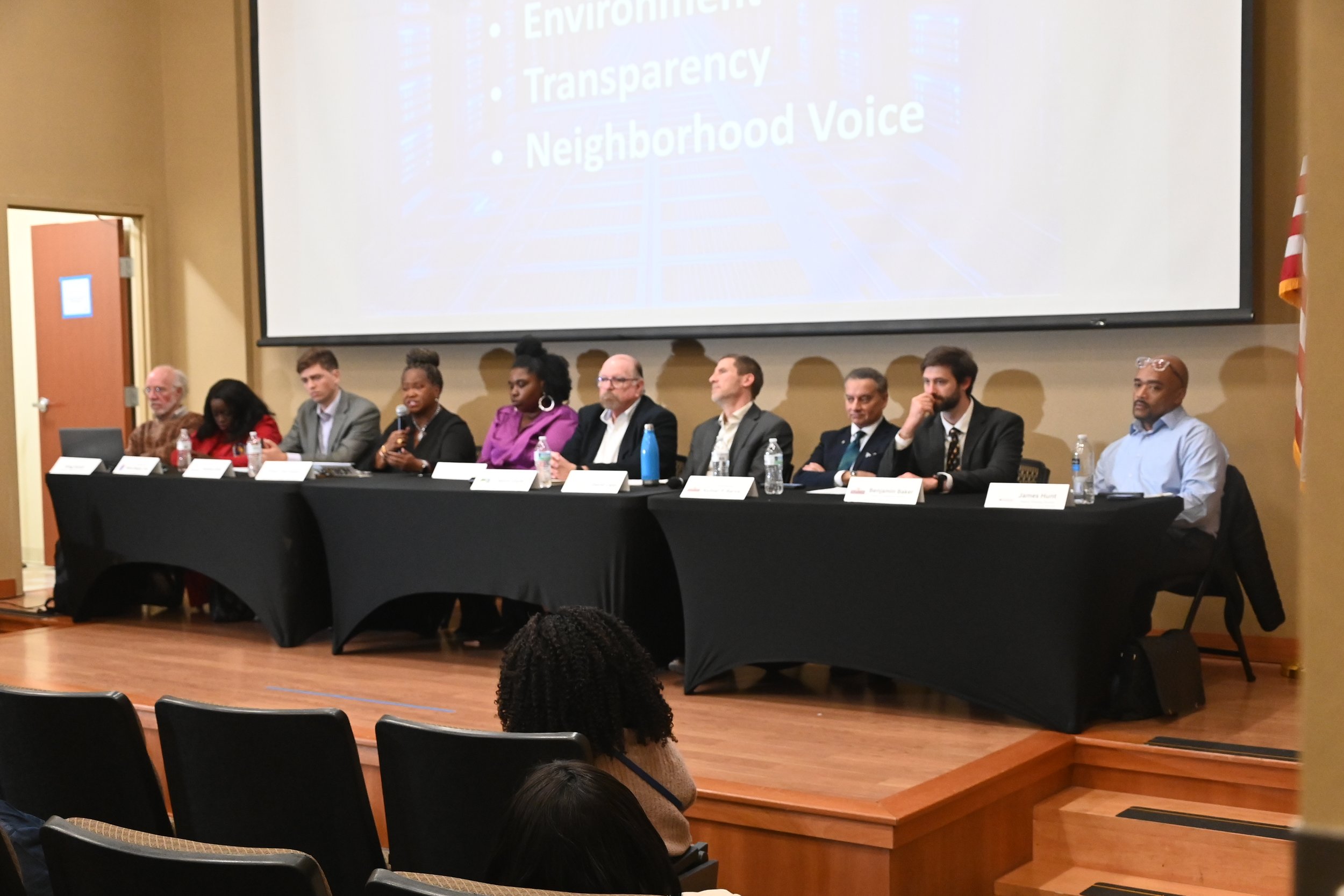
Panelists at What Do Data Centers Mean for Us included: David Lapp, People’s Counsel for Maryland, Commissioner Andrew “Andy” Braverman (Barve), Maryland Public Service Commission, Councilwoman Wala Blegay, District 6, Prince George’s County Council, Taylor Frazier, Organizer of the petition opposing the Landover Mall Data Center, Greg Smith, Sustainable Hyattsville, Staci Hartwell, South County Environmental Justice Coalition, Kevin Coyle, Potomac Riverkeeper Network
“Siting may help mitigate some of the local concrete impacts, and that’s important,” said Smith. “But it doesn’t deal with these much deeper, broader issues that we’re all struggling with as a society. Limited resources to provide electricity and transmission. Global warming–every year we set global records and regional records in high temperatures.”
Kevin Coyle called attention to a source of pollution that is often overlooked: the computers stored in a data center. He said each data center building holds about 200,000 computers, 20% of which need to be replaced every year.
“These computers contain things like cadmium and mercury and arsenic, and they can contain what are called PFAs, which are the chemicals that are used to preserve the wiring,” said Coyle. “And so when you multiply that in the region, the larger Washington D.C. region, what you come up with is that really tens of millions of computers will be coming out of these data centers every year, and there’s no place to put them except landfills.”
Coyle said the location of data centers upstream of crucial sources of drinking water creates another risk. “They’re amassing tens of millions of gallons of fuel, they’re using cleaning chemicals, they’ve got all this e-waste, this toxic e-waste, and it’s all being amassed upstream from our drinking supplies,” Coyle said.
Energy use
Then there’s the fact that every data center needs vast amounts of electricity in order to operate.
David Lapp, who represents Maryland’s utility customers as the Maryland People’s Counsel, is coKevin Coylencerned about rising electricity prices caused by data centers. Lapp said Maryland’s utility network “is premised on gradual growth in electricity demand that’s roughly spread out across broad areas. And data centers are the exact opposite of that. They’re highly concentrated and it’s massive load growth.”
Lapp said that until now, the main driver of increasing electricity costs has been rising distribution rates from companies like Pepco–not from data centers. But he warned the costs from increased data center demand have the potential to drive electricity costs much higher.
Maryland is part of a regional power grid operation called PJM (which stands for Pennsylvania, Jersey and Maryland). The PJM power grid covers part or all of 13 states and Washington D.C. Its territory includes states like Ohio and Virginia that Lapp says have many more data centers than Maryland.
“Maryland is not going to experience blackouts or brownouts unless everybody across PJM is experiencing blackouts or brownouts,” said Lapp. However, he said, data center growth in other parts of the grid could still cause electricity prices to go up, even if Maryland doesn’t build more data centers.
Lapp said a recent PJM forecast for electricity demand in the region shows a growth of 32 gigawatts by 2030–almost three times as much electricity as Maryland’s total use from the past century. This means that Lapp’s advocacy needs to focus on the entire PJM region, not just Maryland.
One of the main principles of his work, said Lapp, is to make it clear that those who cause additional costs should bear the costs. For example, he said the construction of new power plants to meet electricity demand should be paid for by data center developers, not taxpayers.
“If those data centers come online, and they don’t bring additional generation to the system, they are taking generation that supports existing customers, and they are going to drive costs up,” said Lapp. “Maryland ratepayers should not be responsible for building generation plants for data centers.”
Policy/transparency
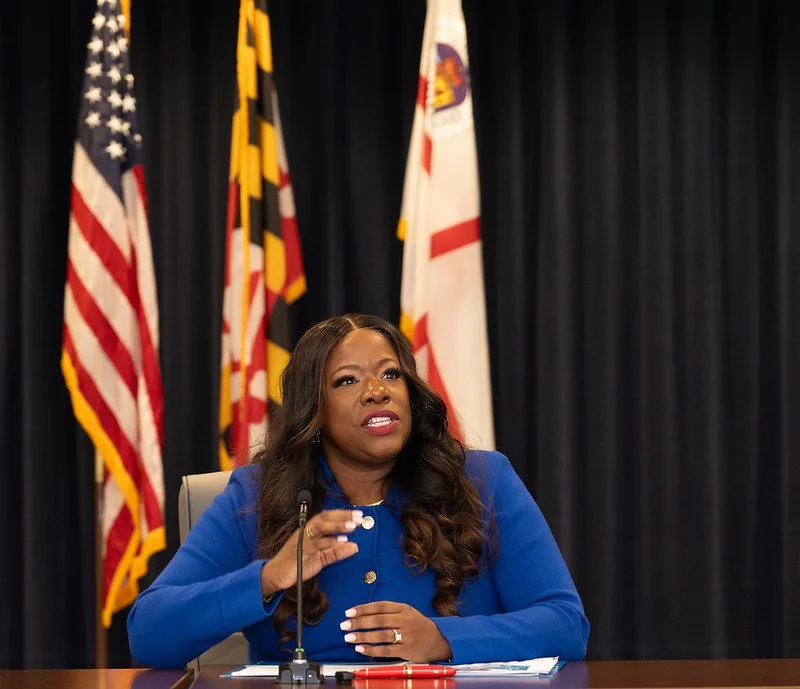
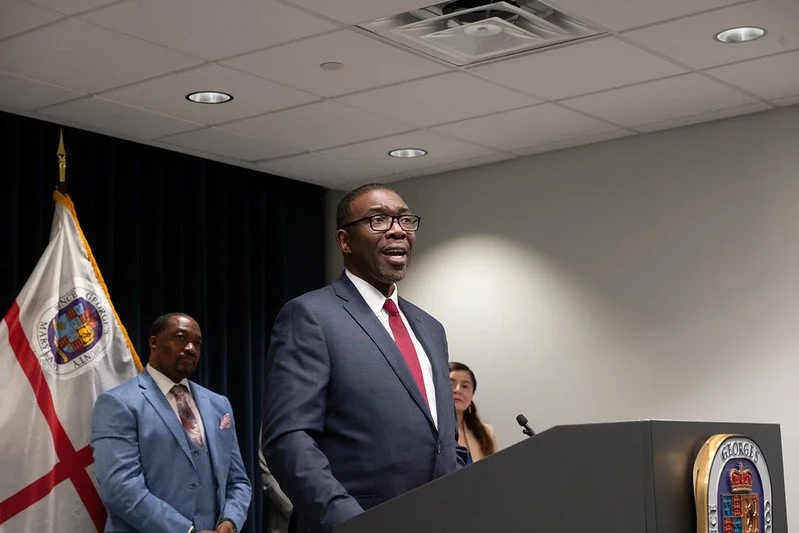
Prince George’s County Executive Aisha Braveboy
In 2021, the Prince George’s County Council passed a controversial bill that continues to shape the fight over data centers. The bill allowed the approval process for “qualified” data centers to skip council review entirely, going straight to the county planning board. County Executive Aisha Braveboy has called the bill a mistake.

District 8 County Councilmember Edward Burroughs III led the task force researching the potential impact of data centers in the county. PHOTO: RAOUL DENNIS // PRINCE GEORGE’S SUITE MAGAZINE & MEDIA
Since then, a 2024 bill to further fast-track the approval process was defeated, and a data center task force committee was created to assess the impact of data centers on Prince George’s County. In November 2025, the task force released their recommendations on data center policy. Among other things, the task force proposed tightening land use restrictions outside of industrial zones, incentivizing “green design standards” for data centers, and allowing more opportunities for public comment on proposed data centers.
In an interview before the final recommendations were released, Greg Smith was very critical of the task force. “The membership is biased, it’s lacking critical voices, the scope of work is inappropriate and inadequate, it’s not going to get to the real issues, and the timeline is way too short,” he said.
The task force, which started in April, presented their findings to the county council on Nov. 30.
“The guy they brought in to discuss the environmental impacts of data centers was the vice president of business development for Pepco,” said Smith. “He might have been an environmental expert, but he didn’t talk about environmental impacts at all…that’s been somewhat emblematic of [the task force’s] approach.”
Coyle said finding a good site for data centers could be challenging.
“To make people safe, you have to find areas that are not environmentally sensitive, where there’s not going to be pollution to the groundwater, and you have to find areas that aren’t near people,” he said.
It remains to be seen if such a site will be found.