

Igniting Quantum Fever

Quantum World Congress Is At Home In Prince George’s As Over 2,000 Attend
By Allana Haynes
PHOTOGRAPHY BY LLOYD JEREMIAH and ALLANA HAYNES
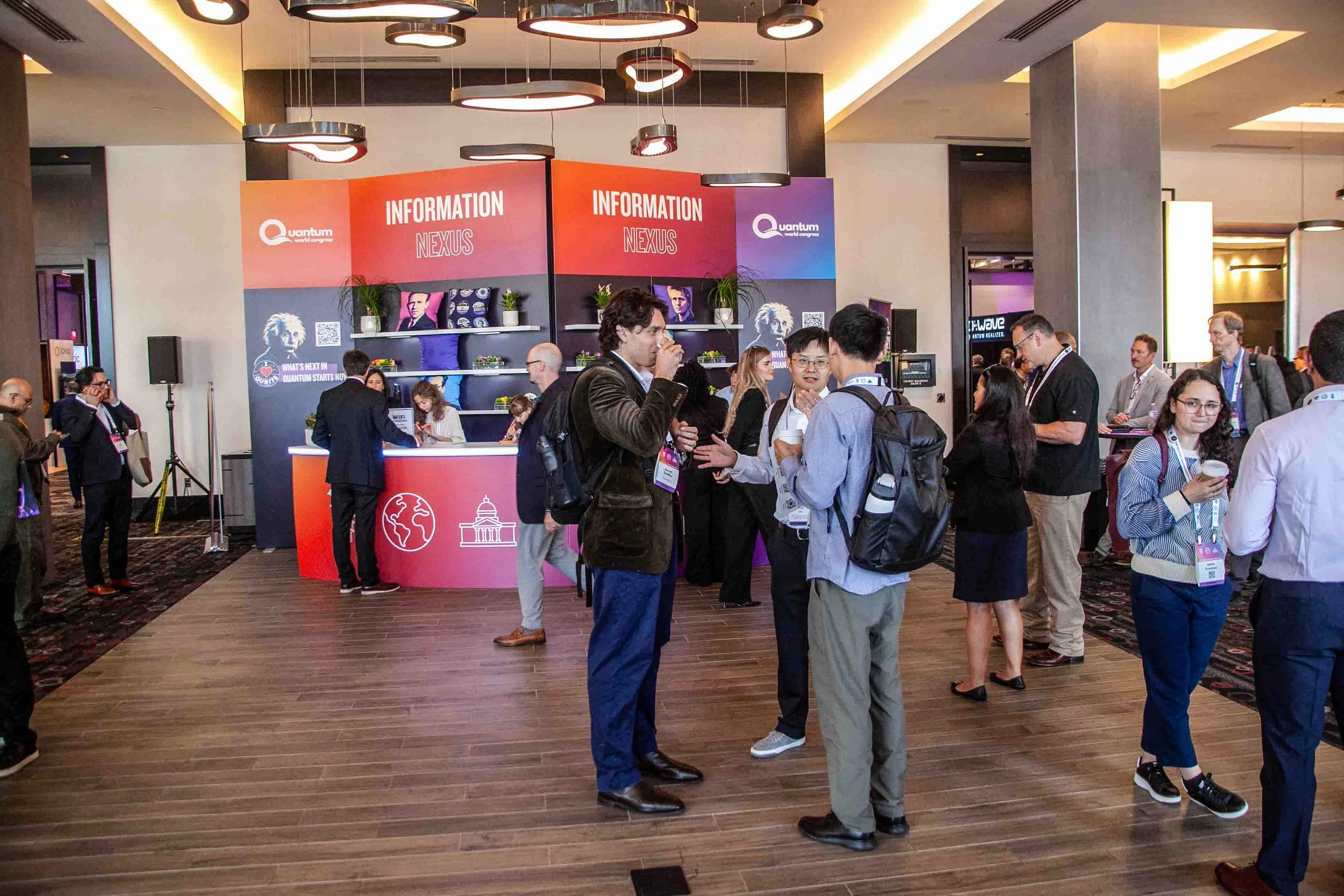
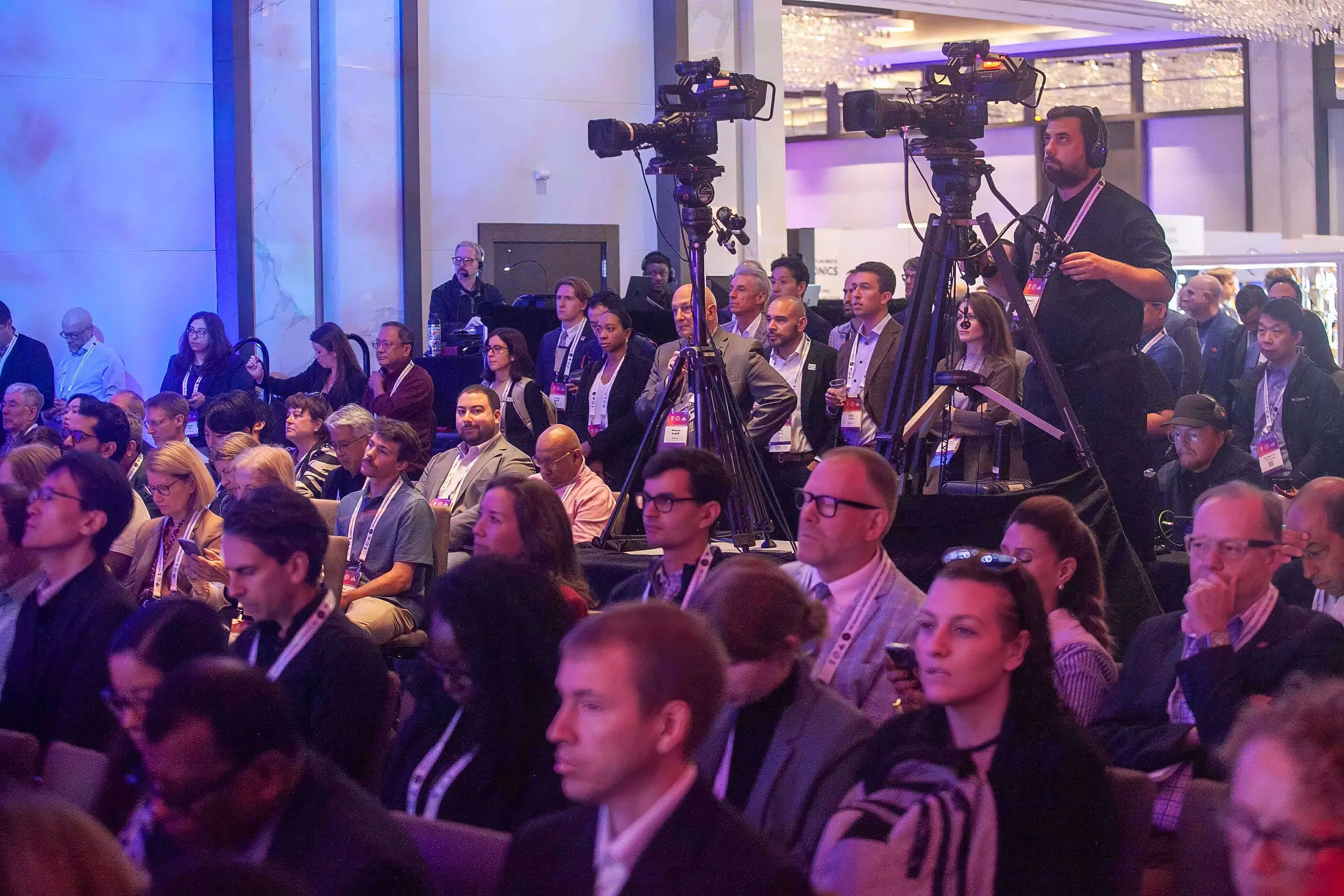
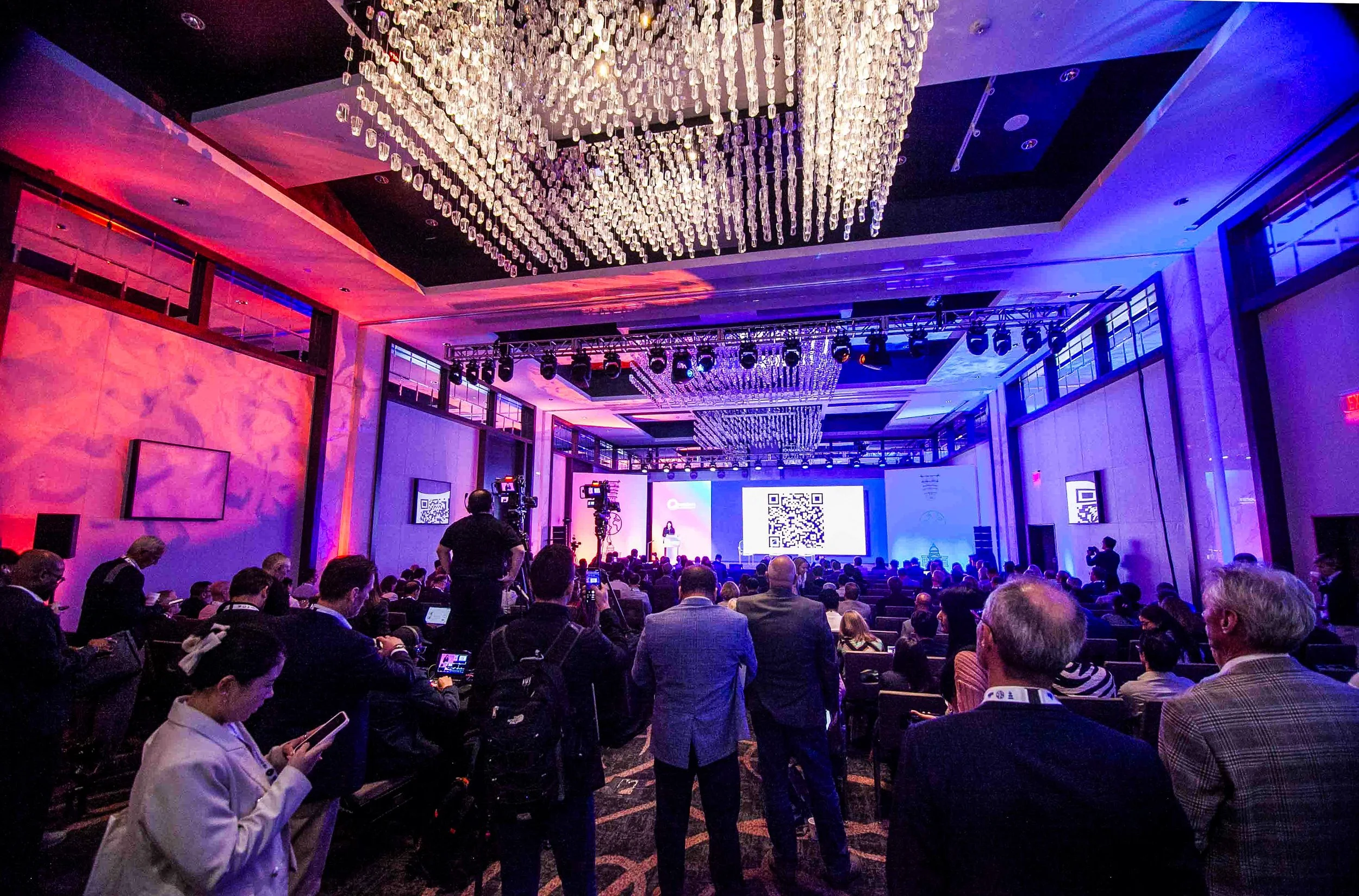
Over 2,000 global industry leaders gathered for the 2026 Quantum World Congress at The Hotel at the University of Maryland, Sept. 23-25.
Hosted by Connected DMV, the event brought together experts in education, finance, government and science to accelerate commercialization and unveil breakthroughs that move quantum technology research from the lab into the real world.
As attendees traveled through Discovery District Maryland at the University of Maryland, College Park, they were greeted by banners welcoming them to the “Capital of Quantum.” Upon arriving at The Hotel at the University of Maryland, they scanned a QR code to check in and downloaded the conference app to view their event schedules.
Stepping off the escalator onto the conference level, they were met by a massive rainbow-colored arch reading, “Welcome to the Startup Launchpad.” The crowd – sporting everything from classic suits and dress shoes to trendy slacks and sneakers – eagerly chatted over coffee and tea in the café before diving into a full day of learning from the top leaders in quantum technology.
Building a Quantum Ecosystem
Quantum technology applies the laws of physics to build devices that leverage atoms, electrons and photons to solve problems that traditional computers cannot handle, according to the World Economic Forum. Unlike AI, which operates as software on traditional computers, quantum technology relies on hardware driven by quantum physics.
QWC debuted in Washington, D.C. in 2022 before expanding to Tysons, VA from 2023 to 2025. Over those years, the first-of-its-kind event rapidly grew into one of the world’s most influential quantum gatherings.

Now convening in College Park – home to DARPA’s Capital Quantum Benchmarking Hub and IonQ – the event places Prince George’s County at the epicenter of the global quantum economy.
Sam Braden IV, Prince George’s County Economic Development Corporation Business Development Manager for IT and Cybersecurity said the growing quantum ecosystem will drive significant economic growth in Prince George’s County.
“When we’re talking about the economic development of this area, creating jobs is very important, but also increasing the commercial tax base,” he said. “When you have a company that is a multimillion dollar company, not only does it generate revenue, but it also improves the infrastructure around it.”
Braden anticipates a rapid expansion of quantum technology throughout the county.
“This industry has been around for several decades, but this is a critical time because it is starting to grow a lot, specifically here,” he said. “As time moves forward, you will see more things going on beyond the University of Maryland.”
In fact, it has already begun.
This regional momentum is drawing significant recognition from global quantum leaders.
Riverlane, the global leader in quantum error correction, recently announced plans to open its new U.S. headquarters in Discovery District Maryland. The facility will feature state-of-the-art laboratory and office space designed to drive research collaboration, customer engagement and business development. The company is also launching a strategic collaboration with the University of Maryland, College Park to accelerate quantum error correction research and cultivate the next generation of quantum talent.
Riverlane participated in keynote presentations, technical sessions and university engagements at the conference.
QWC covered the entire global quantum ecosystem from communications and computing to networking and sensing.
Featuring speakers from industry leaders such as D-Wave, IBM and IonQ, the three-day event offered bootcamps and workshops to advance global collaboration, build public trust and prepare a future-ready workforce.
Throughout the event, attendees packed the hotel’s meeting rooms to attend interactive workshops, including “Quantum Networking - Use Cases for Entanglement Distribution” led by Qunnect’s Noel Goddard, Mehdi Namazi and Maël Flament.
The presenters used vibrant graphics and time-lapse videos to bring quantum networking’s real-world applications to life.
Joelle Jordan, a cyber security manager, attended the quantum networking workshop to learn about its impact on cybersecurity.
“[I wanted] to understand quantum better, how it works, how it’s going to impact the future of cyber and being able to be prepared and to advise on what’s coming,” she said.
Carlin Biyoo, a high-performance computing systems engineer, attended the workshop to explore emerging technologies in quantum computing.
“We tend to want to do things a little faster and quantum computing, which is basically trying to meet the speed of light, is trying to bring that demand that we have,” he said.

Timofey Gafurov, 17, Elhaan Azizi, 17 and Laetitia Mbella, 15, attended the workshop as a part of George Mason University’s Pathways to Quantum Immersion Program, an initiative that prepares high school students for careers in quantum science.
Timofey attended the conference to gain exposure to quantum technology.
“I really want to go into research, so getting myself into this environment as early as possible was a really crucial part of me choosing this internship and trying to come here,” he said.
Elhaan gained insight into the rapidly growing global quantum economy.
“I’ve learned that the quantum community is really connected,” he said. “There’s representatives from different countries like Korea, Singapore and the U.K., so that kind of surprised me.”
Laetitia hopes quantum technology becomes more widespread in the future.
“Quantum is in everything, even in places that you wouldn’t think,” she said. “With technology becoming more advanced nowadays, there’ll be a point in time when quantum is really relevant.”