
Heat Stroke Hits Fast: A Silent Summer Killer
Know the Warning Signs Before It’s Too Late
Extreme heat is the deadliest weather-related hazard in the United States, claiming more lives annually than hurricanes, floods, tornadoes, and lightning combined. According to the U.S. Centers for Disease Control and Prevention (CDC), more than 1,200 Americans die from extreme heat each year, while thousands more require emergency medical treatment for dehydration, heat exhaustion, and heat stroke.
In Maryland, heat-related illnesses send hundreds of residents to emergency departments each summer. State health officials routinely record dozens of heat-associated deaths annually, particularly during prolonged periods of triple-digit heat indices and high humidity.
Heat Stroke: A Medical Emergency

Heat stroke occurs when the body's cooling system fails and internal temperatures rise to dangerous levels—typically 104°F or higher. Without immediate treatment, heat stroke can cause permanent brain damage, organ failure, and death.
Call 911 Immediately If Someone Has:
✓ Body temperature of 104°F or higher
✓ Hot, dry skin or very little sweating
✓ Confusion, disorientation, or unusual behavior
✓ Severe headache
✓ Rapid heartbeat or rapid breathing
✓ Seizures
✓ Fainting or loss of consciousness
✓ Extreme weakness or inability to respond

While Waiting for Emergency Responders:
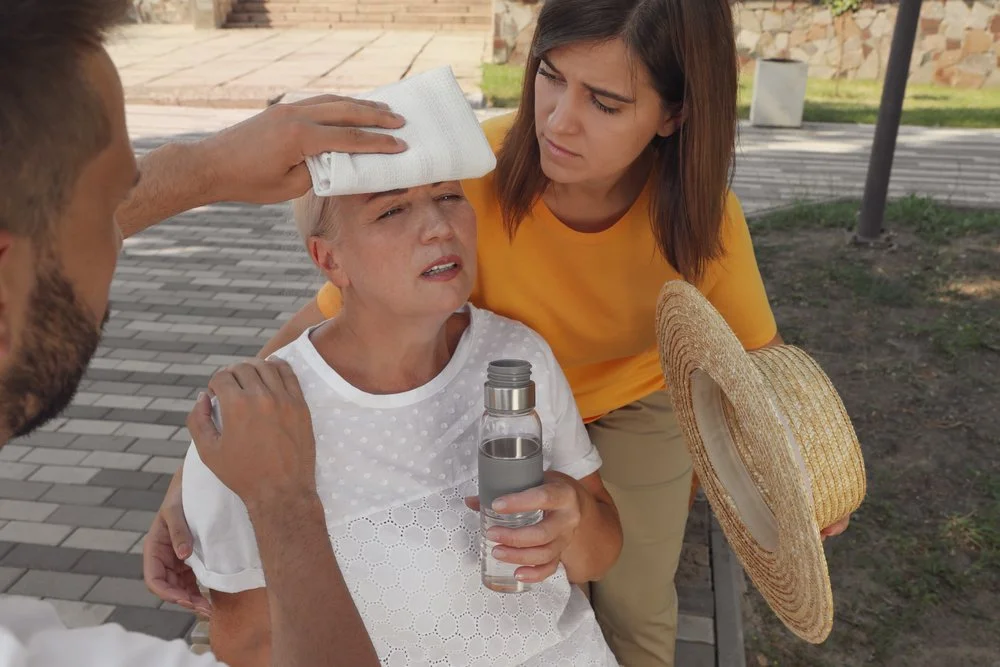
• Move the person to a shaded or air-conditioned area.
• Remove excess clothing.
• Apply cool water to the skin.
• Place ice packs on the neck, armpits, and groin.
• Fan the person continuously.
• Do not force fluids if the person is confused or unconscious.
Who Is Most At Risk?
Children and Teenagers
Young people generate more body heat and cool themselves less efficiently than adults. They may ignore symptoms in order to continue playing or participating in sports.
Older Adults
The body's ability to regulate temperature decreases with age. Many older adults also take medications that increase dehydration risk.
People With Chronic Health Conditions
Heart disease, diabetes, obesity, respiratory illnesses, and certain medications can significantly increase vulnerability to heat-related emergencies.
Protect Yourself During Extreme Heat

✓ Drink water before you feel thirsty.
✓ Limit outdoor activity between 10 a.m. and 6 p.m.
✓ Wear lightweight, light-colored clothing.
✓ Take frequent breaks in air-conditioned spaces.
✓ Check on elderly neighbors and relatives.
✓ Never leave children or pets in parked vehicles.
✓ Avoid alcohol and excessive caffeine during heat waves.
Bottom Line
Heat stroke can develop in minutes and become fatal just as quickly. Medical experts say the safest approach is simple: take every heat warning seriously. A few preventive measures today can save a life tomorrow.
This sidebar is designed to fit a magazine callout box alongside the main article and can be paired with a red "Emergency Warning" header or thermometer graphic for additional visual impact.